 FoxxDen
Your first £50 to £100
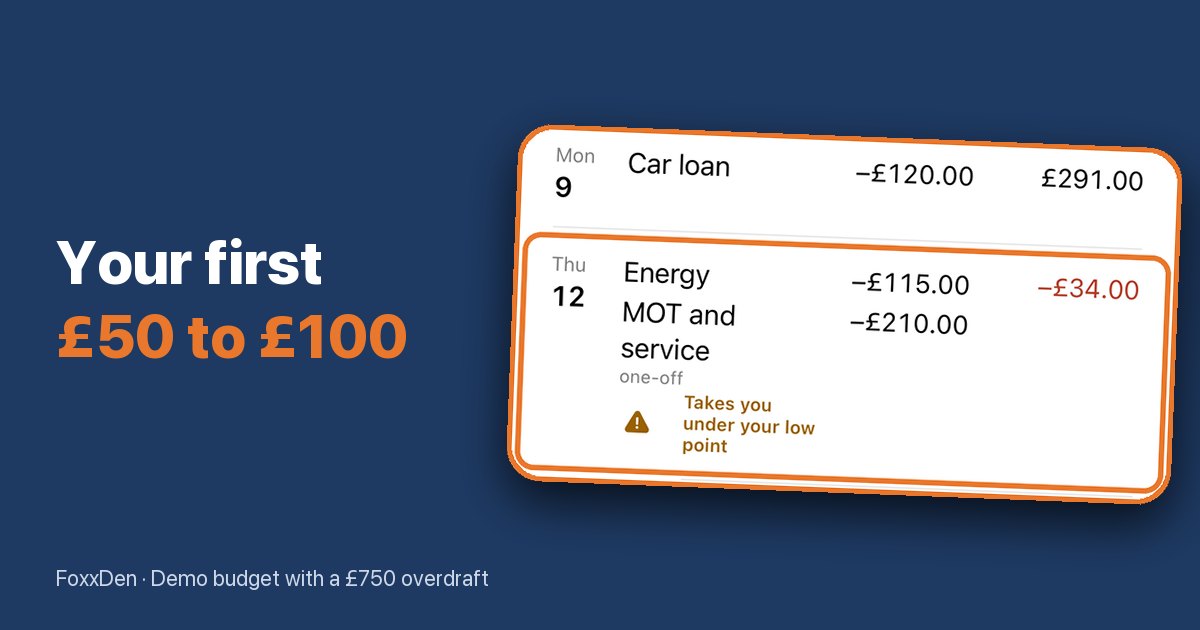
The things that caught me out were never the big disasters. It was the MOT I’d forgotten was due. The phone bill that came in slightly more than I’d planned. The children needing a present for a friend’s birthday party. None of them was much on its own, but with nothing behind me, each one went straight on a card or into the overdraft.
Most saving advice starts with a big number. Three months of bills. Six months of expenses. If you’re juggling cards and an overdraft, that isn’t motivating. It’s just another thing you’re failing at.
So forget the big number for now. Start with £50 to £100.
Why so small?
Because that’s the size most of life’s little surprises are. This amount won’t replace a boiler, but it can cover the party present, the higher bill or a good chunk of a forgotten MOT. Each one you can pay without borrowing is a step you don’t take backwards.
Pick the end that suits you. If money’s very tight, £50 is a real achievement. If you’ve got children, a car or bills that move around, £100 may be the better target.
You stop being someone with nothing behind them, and become someone with a little put aside.
But shouldn’t it go on the debt?
On paper, often yes. Keeping £100 back from a card at 24.9% costs roughly £2 a month in interest. I think of that as a small price for not reaching for the card the next time something comes up.
Keep making at least your minimum payments. Then, once your buffer is there, go back to clearing expensive debt. This isn’t saving instead of paying off debt. It’s a little protection while you do.
How to find it
- Start with one small amount. £2 or £5 on pay day is fine. It’s the habit that counts.
- Put it somewhere separate. An easy-access account you won’t see every day works well.
- Use one-off money. A refund or a cancelled subscription can go straight in.
- Move it at the right time. Move it on pay day, once the bills are covered, not the day you run short.
When you use it
You will, and that’s what it’s for. Using it doesn’t mean you failed. It means something came up and didn’t go on a card. Top it back up and carry on.
Once it feels normal to have that buffer there, your safety net is the next step.
If paying for essentials or minimum payments feels impossible right now, please don’t try to fix that with a small pot. StepChange, National Debtline and MoneyHelper offer free, confidential help.