 FoxxDen
A New Year money reset in an hour
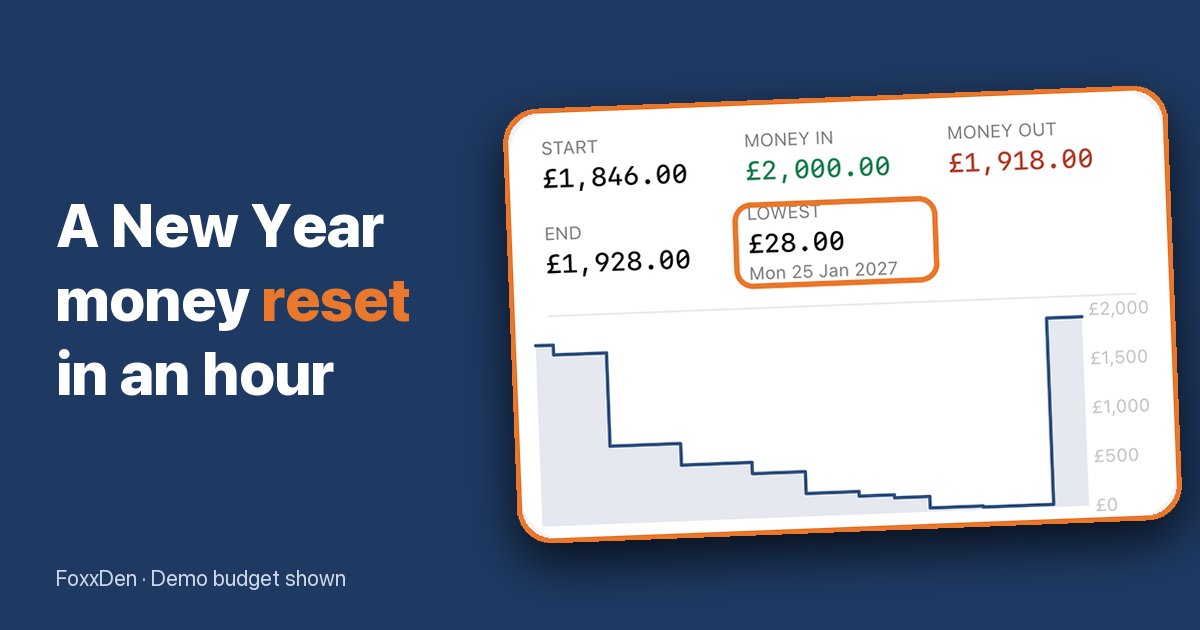
January is a good month to sort money out. The bills from Christmas have landed, the year ahead is clear, and an hour spent now saves a lot of small surprises later. You don’t need a new system or a strict budget. Just a cup of tea, last few months’ statements and the steps below.
Work out yours: Bills account calculator →
Every bill for the year, including the yearly ones, turned into one amount to set aside each pay day.
1. Get through January first
If you were paid early in December, January can be five weeks or more until the next pay day, with all of January’s bills in between. Before anything else, work out your lowest day this month: today’s balance, minus the bills still to go and your usual spending. If it’s tight, now is when you still have choices, like moving a bill date or having a quieter week or two.
2. Check every regular payment
Go through the last three months of statements and write down everything that comes out regularly. It’s easy to find something you’d forgotten about.
- Subscriptions you don’t use. Free trials from Christmas that have quietly started charging, apps, streaming services, the gym.
- Payments that have crept up. Compare this month’s amounts with the same time last year.
- Deals coming to an end. Insurance, broadband and phone contracts often jump in price at renewal. Note the end dates so you can look around in good time.
3. Spot the spring price rises
A lot of bills change in April. Council tax usually goes up then, and many phone and broadband contracts have a yearly price rise written in for April. The energy price cap changes every three months, in January, April, July and October. Pencil in a few extra pounds now so April doesn’t catch you out.
4. Plan the yearly bills
Write down everything that comes once a year: car insurance, the MOT and service, the TV licence, breakdown cover, birthdays, the summer holiday, and next Christmas. Add them up and divide by twelve. That’s what they really cost each month.
The bills account calculator does this for you, along with your monthly bills, and shows one amount to move across each pay day. Putting that into its own account means the money is there when each bill arrives. I’ve written about why I give every account a job.
5. Choose one thing to work towards
A small safety net, a card cleared before its 0% deal ends, a holiday, a head start on next Christmas. One goal you can name is easier to keep going with than five. Set up a standing order on pay day so it happens without having to decide again each month.
For a head start on December, there’s a guide to saving for Christmas a little each month.
How FoxxDen helps
FoxxDen puts every bill, yearly ones included, on its real date and shows your balance for every day ahead, so the long January and the April rises are there to see before they arrive. It checks each account’s bills against what you move in, and its safe to save figure looks 12 months ahead before counting anything as spare.
An hour now, and the rest of the year is mostly just checking in. That’s a good way to start it.
— Foxx