 FoxxDen
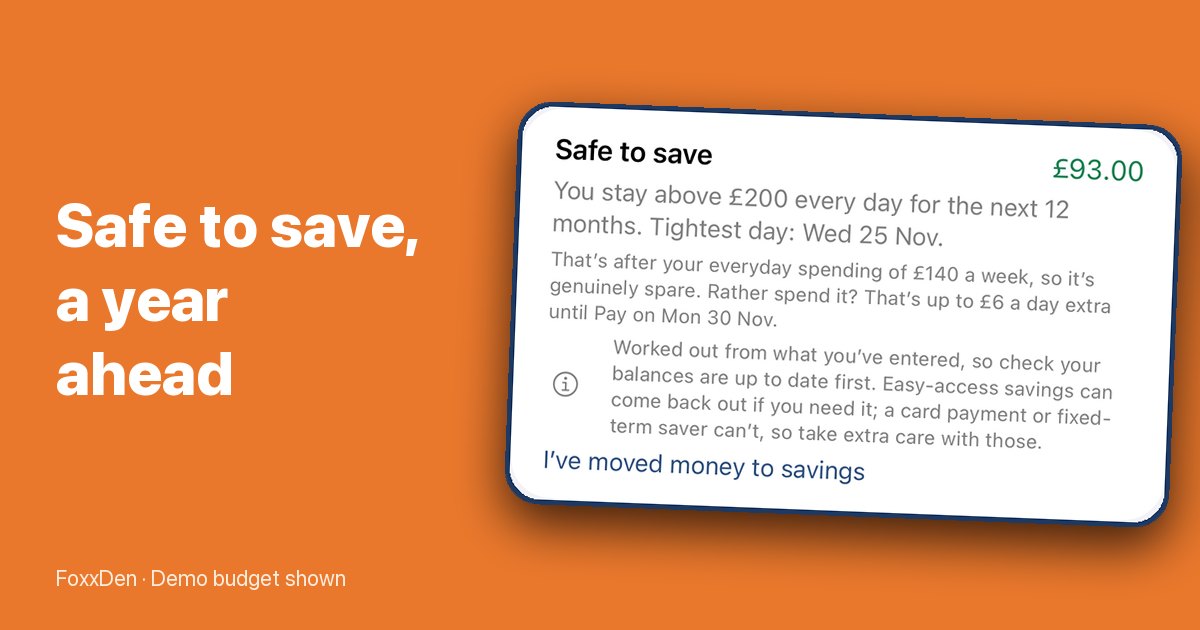
Why “safe to save” looks a year ahead
Pay day used to be the most dangerous day of my month. The balance looked healthy, so I’d move a chunk into savings, feel great about it, and then a few weeks later pull half of it back out because the car insurance renewed or a birthday came round.
The money was never really spare. It just looked spare, because I was only looking at today.
Today’s balance tells you what you have. It doesn’t tell you what you can spare.
The problem with “what’s left”
Most budgets work out what’s left this month: money in, minus money out. But bills don’t arrive evenly. Some months have an annual renewal, a quarterly water bill, Christmas, or five Fridays instead of four. A month that looks comfortable can be setting you up for a tight one later.
How safe to save works it out
FoxxDen does what I used to do by hand in my spreadsheet:
- It looks at every day for the next 12 months, with every bill, regular payment, spending estimate and goal payment you’ve already planned.
- It finds your lowest day in that time, the day money is tightest.
- It keeps the amount you like to have in your account (£200 unless you change it) on that lowest day.
- Anything above that is safe to save today. Move it, and you still won’t dip below your amount on any day in the next 12 months.
An example
Say it’s pay day and your balance is £1,400. A “what’s left” budget might say you can save £600 this month.
But in March your car insurance renews at £480, the same week as a couple of birthdays. FoxxDen sees that your lowest day will be in March, at £550 if you don’t move anything today. Keep your £200, and £350 is safe to save, not £600.
Save the £350 and March comes and goes without you touching your savings. Save the £600 and you’d probably be moving money back, or reaching for a card.
Why a whole year?
FoxxDen used to look six months ahead. That caught most of the big, lumpy bills, but not all of them: a renewal that comes round once a year could sit just outside the window, so money looked spare when it wasn’t. A year means every yearly bill (the car insurance, the TV licence, Christmas) is in view at least once.
Looking further ahead can make safe to save a little lower. That’s on purpose: it’s the smaller, honest number again. The further ahead it looks, the more it leans on your estimates, which is why the monthly check matters. You can change how far ahead it looks in Forecast settings.
It only works if the forecast is honest
That’s why FoxxDen asks you to check your balance once a month. If it’s a bit out, one small correction puts it right, and safe to save starts from your real balance again. After a few checks, the app shows how close the forecast has been, so you know you can trust the number.
The smaller, honest number beats the bigger, hopeful one every time. It’s the money you get to keep.